
By Abdulkareem Haruna
The Islamic State West Africa Province (ISWAP) has survived nearly two decades of military offensives by transforming into a tech-savvy organisation that runs a parallel government, a new report has revealed.
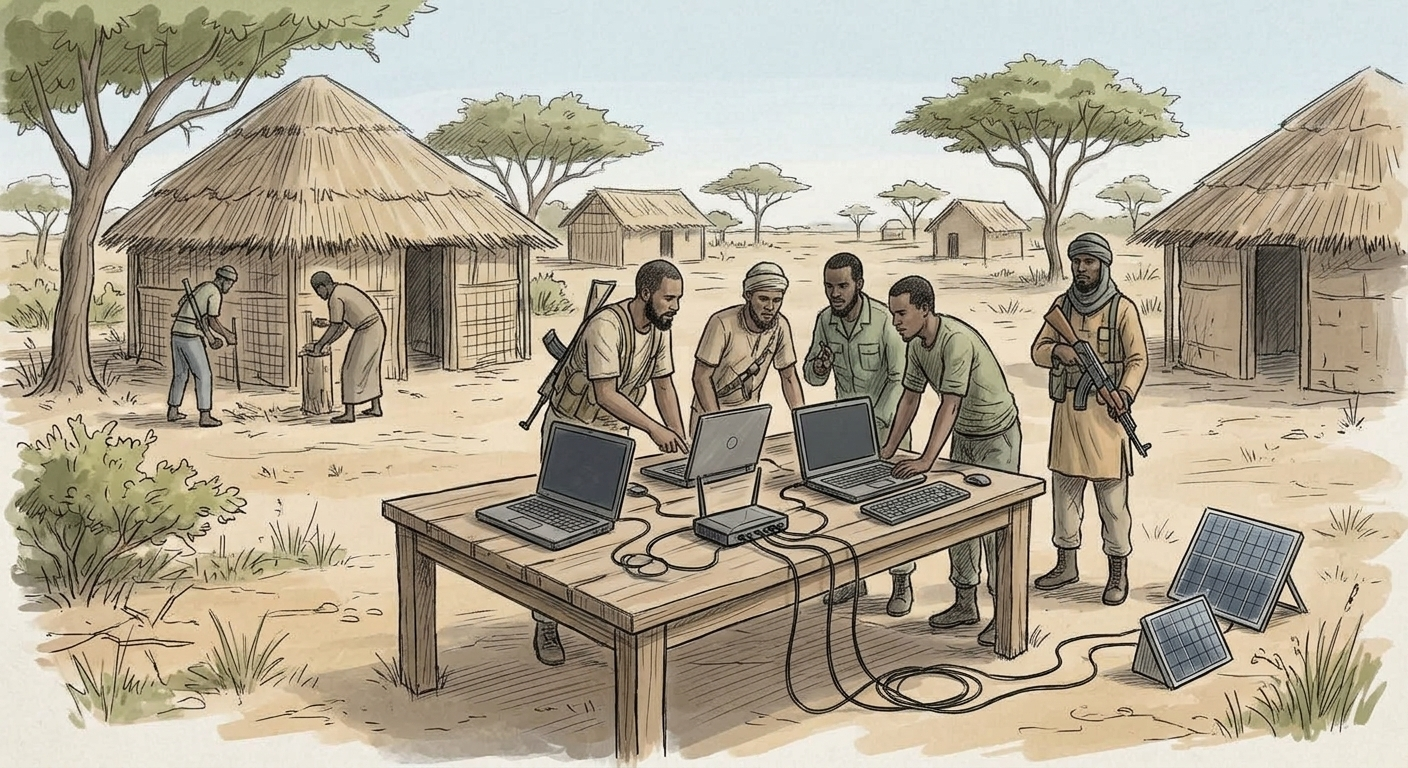
According to the report by the Institute for Security Studies (ISS), the terror group is far from defeated. Instead, it has built an adaptive system driven by commercial drones, satellite internet, local weapon-making, and international funding.
Titled Wiring the insurgency: Inside ISWAP’s adaptive technology programme, the study is based on extensive fieldwork, including fresh 2026 interviews with senior Boko Haram defectors.
From surveillance to deadly drone attacks
The report highlights how ISWAP has upgraded its use of technology on the battlefield. While the group only used captured drones for spying in 2014, it has now made drone warfare a standard part of its operations.
In 2025 alone, ISWAP carried out more than 15 attacks on military bases using modified commercial DJI drones fitted with locally made explosives.
To keep its fighters connected and evade security tracking, the group also relies heavily on satellite communication tools, including Starlink and Thuraya.
Backing from ISIS and cash for looted weapons
The ISS findings explain why ISWAP has grown much stronger than its rival faction, Jama’atu Ahlis Sunna Lidda’awati wal-Jihad (JAS). Direct links to the global Islamic State (ISIS) network provide ISWAP with technical training, media support, and steady funding.
This foreign backing also fuels attacks on Nigerian military outposts through a reward system known as “Ghanimah.” Under this system, ISWAP fighters receive cash payouts—funded by ISIS—whenever they raid military bases and hand over captured weapons and equipment.
Secret agents in civilian communities
Beyond the battlefield, ISWAP has built a hidden governance structure called Rijal–Awam to control local populations.
Through this system, the group plants undercover agents inside civilian communities. These agents gather intelligence, enforce rules, and manage a parallel local economy using a mix of basic governance and intimidation.
Warning over artificial intelligence
The report also warns security agencies to prepare for the next wave of insurgent technology. Researchers found early signs that terror groups may soon adopt frontier technologies, urging the military to update its counterinsurgency strategies before Artificial Intelligence (AI) becomes an active weapon in the conflict.