
By Abdulkareem Haruna
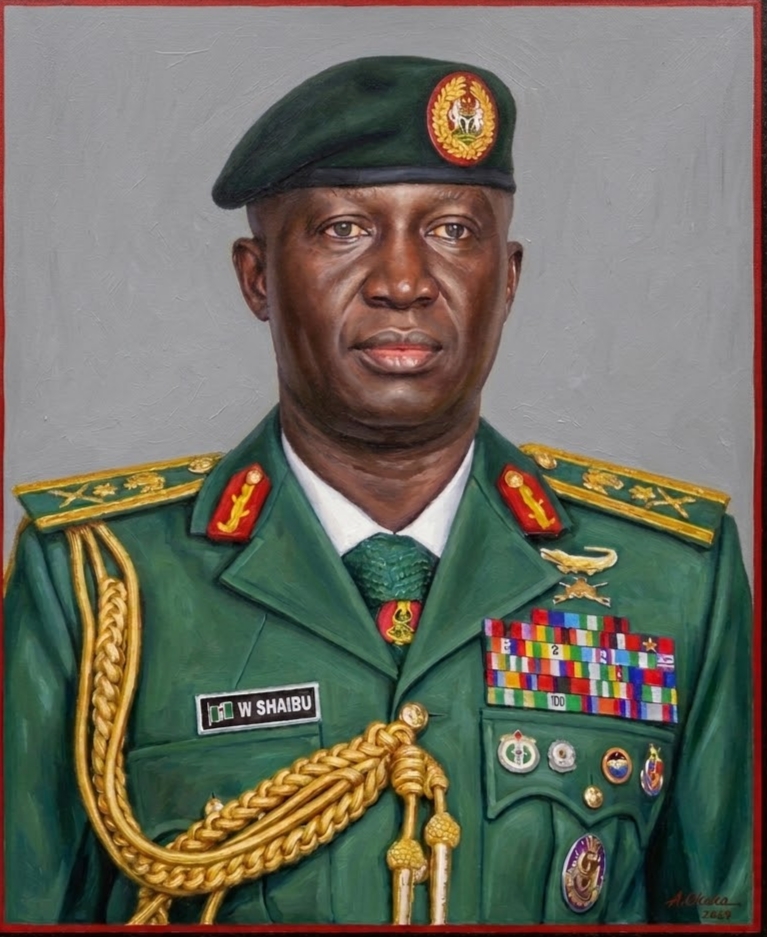
Exactly one year ago, President Bola Ahmed Tinubu appointed Lieutenant General Waidi Shaibu as the 25th Chief of Army Staff (COAS).
Tasked with dismantling entrenched insurgent networks in the North-East and crippling bandit cartels in the North-West, amongst other basic tasks of soldiering, General Shaibu assumed command with a heavily anticipated command philosophy centered on building an agile, adaptable, and combat-ready force.
Twelve months into his tenure, an extensive operational audit reveals that Lieutenant General Shaibu has presided over a transformative period for the Nigerian Army. By shifting toward an offensive-first posture, heavily integrating tactical technology, and decentralizing command structures, the military has reclaimed significant operational momentum.
An analytical breakdown of field achievements, counter-insurgency metrics, and sweeping administrative reforms provides a comprehensive look at his first year in office.

. Field Operations and Kinetic Achievements: North-East and North-West
Under General Shaibu’s strategic direction, the Nigerian Army adopted an aggressive, multi-theater approach. Leveraging his deep operational experience—having previously served as Theatre Commander of Operation Hadin Kai and Director of Armour Research—he prioritized precision strikes deep inside enemy enclaves.
The North-East Theater (Operation Hadin Kai)
The insurgency in the North-East, characterized by the activities of Boko Haram and the Islamic State West Africa Province (ISWAP), has seen severe degradation. Shaibu ordered continuous clearance operations targeting the fringes of the Lake Chad Basin and the Sambisa Forest.

High-Value Targets Neutralized: Coordinated ground offensives and synchronized air-to-ground strikes resulted in the neutralization of over 28 high-ranking insurgent commanders and logistics coordinators, severely disrupting the operational cohesion of splinter terror cells.
Insurgent Surrenders: Sustained kinetic pressure combined with robust non-kinetic approaches led to the voluntary surrender of over 11,200 combatants, alongside their dependents. This mass capitulation marks a major turning point in thinning out the manpower of the terrorist groups.
Hostage rescues: Ground troops successfully liberated approximately 2,150 civilians, many of whom were held captive for years in remote illegal camps across the Timbuktu Triangle.

The North-west and orth-central (Operation Fansan Yamma)
Addressing the escalating crises of banditry and kidnapping that plagued agricultural and mining corridors in Zamfara, Katsina, and Kaduna states, General Shaibu authorized sweeping anti-banditry operations.
Troop deployments were significantly expanded in rugged terrains previously inaccessible to the military. By deploying specialized night-operations units and utilizing tactical drones for real-time reconnaissance, the army dismantled major bandit camps and severely degraded the terrorists’ capacity to conduct mass abductions.
2. Technical Capabilities and Hardware Refurbishment
General Shaibu’s command philosophy places a heavy emphasis on self-reliance in military engineering and hardware maintenance.
In-Theatre Equipment Upgrades
As an Armour Corps specialist, General Shaibu recognized the logistical bottlenecks inherent in foreign procurement pipelines. He moved to overhaul the army’s maintenance doctrine by expanding in-theater repair workshops.
Damaged Armoured Personnel Carriers (APCs), Mine-Resistant Ambush Protected (MRAP) vehicles, and infantry fighting vehicles were rapidly refurbished locally by army engineers. This initiative drastically cut down equipment downtime and ensured frontline soldiers had the necessary armor support during protracted engagements across rough terrain.
Drone integration and communication enhancements
The expansion of the Unmanned Aerial Systems (UAS) program has fundamentally altered battlefield intelligence. Army units are now routinely supported by tactical surveillance drones, providing battalion commanders with immediate situational awareness.
Furthermore, secure communication links were upgraded across all sectors, allowing for seamless joint tactical coordination between the ground troops, the Nigerian Air Force, and various intelligence agencies. This fusion of sensors and shooters is widely credited with the increase in successful ambushes set by Nigerian troops against insurgent supply lines.

3. Administrative reform and institutional restructuring
Beyond the immediate battlefield successes, General Shaibu has enacted comprehensive administrative overhauls to strengthen the army’s institutional foundation.
Troop welfare and medical support
Recognizing that the resilience of the force relies heavily on personnel care, the COAS decentralized troop welfare schemes and fast-tracked medical evacuation protocols. Emergency responses for Wounded-in-Action (WIA) personnel were significantly shortened through improved logistical pipelines and advanced trauma care training for field medics.
Additionally, extensive renovation and reconstruction projects were launched to upgrade aging barracks nationwide. Improving the living accommodations of soldiers and their families remains a central plank of Shaibu’s commitment to raising military morale.
Civil-Military Projects Mark Anniversary Milestone
To mark his first anniversary in office, the Chief of Army Staff (COAS), Lieutenant General Waidi Shaibu, launched a wide-reaching series of infrastructure, welfare, and civil-military projects across Nigeria. Rooted in his “Soldier First” concept and ”Sound Administration” philosophy, the initiative targets troop morale, operational readiness, and community relations through the simultaneous commissioning of 49 major projects nationwide.

Barracks Infrastructure and Housing Expansion
* Federal Capital Territory (11 Projects): Unveiled modern Officers Transit Accommodation at Life Camp, official quarters for principal officers, and administrative complexes for both the Nigerian Army Military College (NAMC) and the School of Communication (NASC) at Giri.
* Nationwide Formations (38 Projects): Deployed across multiple states to tackle long-standing accommodation shortages, delivering housing for over 1,320 personnel. Key additions include 90 family quarters across Mogadishu, Lungi, and Mambilla Barracks, alongside Corporal and Below Quarters (CBQ) and Aviation Command housing at Giri.
* Healthcare & Counter-Terrorism Support: Commissioned a new Headquarters complex for the Nigerian Army Medical Corps at Giri. For frontline operations, the Army unveiled 36 upgraded family flats at Maimalari Cantonment in Maiduguri under Operation Hadin Kai and new administrative and residential blocks for the 233 Tank Battalion in Damaturu.
Strategic Civil-Military Cooperation (CIMIC) Outreaches
Beyond internal barracks development, the Army completed over 262 community intervention projects across all six geopolitical zones to strengthen public relations, digital literacy, and basic infrastructure:
* North-East Region Interventions: Tailored specific support for conflict-affected communities in the North-East, featuring 36 upgraded housing units in Borno State to accommodate families of personnel deployed under Operation Hadin Kai, new administrative and residential facilities at the Brigadier Maimalari Military Cantonment in Maiduguri, as well as community health interventions and water security schemes.
* South-South & South-East: Remodeled Community Secondary School Rumumasi (Obio/Akpor LGA), renovated schools in Khana LGA, built town halls in Oyigbo and Obudu LGAs, established civic pavilions in Yakurr LGA, restored the power grid in Mkpat Enin LGA, and delivered a 500KVA transformer with a community hall in Ihitte Uboma LGA.
* North-West & North-Central: Constructed new classroom blocks at GSS Panladan (Sabon Gari LGA), executed educational and hygiene drives in Gwagwalada, built an 80,000-litre solar borehole network in Kerau (Katsina), installed commercial water systems in Muye (Niger), renovated primary schools in Ankpa LGA (Kogi), and set up a 60,000-litre water reticulation facility in Irepodun LGA (Kwara).
* Digital & Social Impact: Outfitted local schools with fully furnished computer laboratories featuring internet connectivity to support computer-based testing, alongside healthcare facility upgrades and solar-powered water supply schemes nationwide.
Restructuring and Expanding Frontiers
Under General Shaibu, the Nigerian Army has expanded its strategic footprint to preempt emerging threats. This involved restructuring various brigades for better administrative agility and establishing Forward Operating Bases (FOBs) in previously volatile rural communities.
Furthermore, he has continuously enforced strict compliance with the International Rules of Engagement and joint civil-military relations. By holding joint civil-military town halls in conflict-affected zones, the army has begun successfully rebuilding the trust necessary to gather local actionable intelligence.
The Path Ahead
As Lieutenant General Waidi Shaibu concludes his first year as the Chief of Army Staff, the results are indicative of a military in transition – moving decisively from containment to neutralization.
While asymmetric threats across complex terrains require continuous vigilance, the aggressive deployment of localized technical capabilities, deep-strike clearance operations, and a renewed focus on troop morale have significantly strengthened the operational posture of the Nigerian Army under his command.
