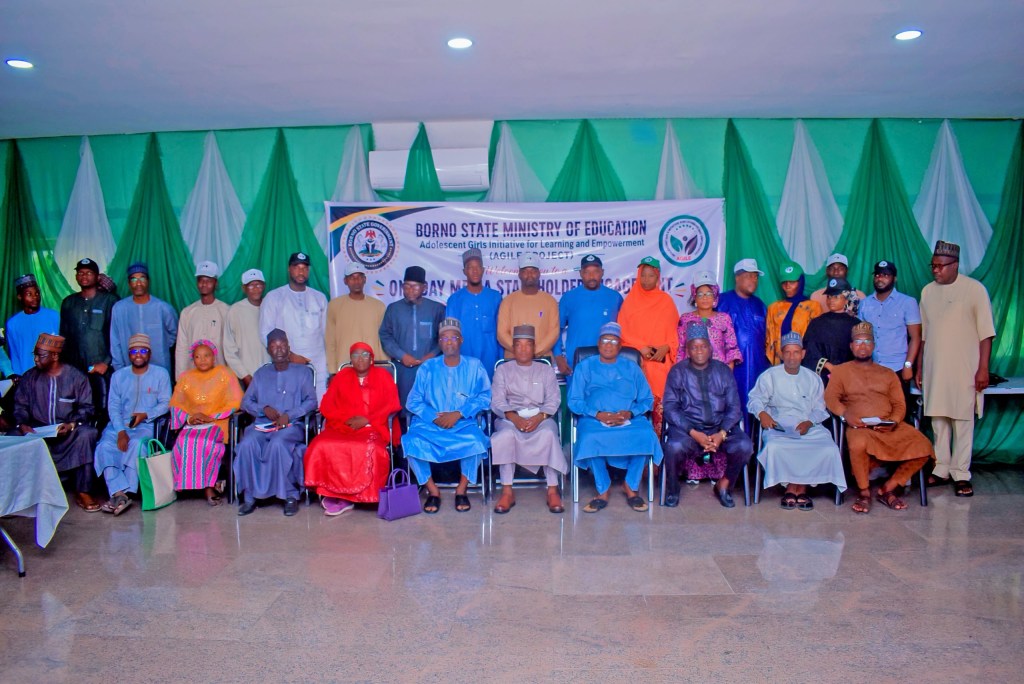
By Abdulkareem Haruna
Facing a daunting out-of-school crisis that disproportionately affects Northern Nigeria, the Adolescent Girls Initiative for Learning and Empowerment (AGILE) has turned to the press, training Borno State journalists to spearhead advocacy and improve public reporting on girls’ education.
The one-day capacity-building workshop, themed “Improving AGILE–Media Cooperation,” was convened on Monday in Maiduguri by the Borno State Ministry of Education through the state’s AGILE Project. The engagement aimed to forge a stronger alliance between development implementers and the media to dismantle barriers keeping adolescent girls out of classrooms.

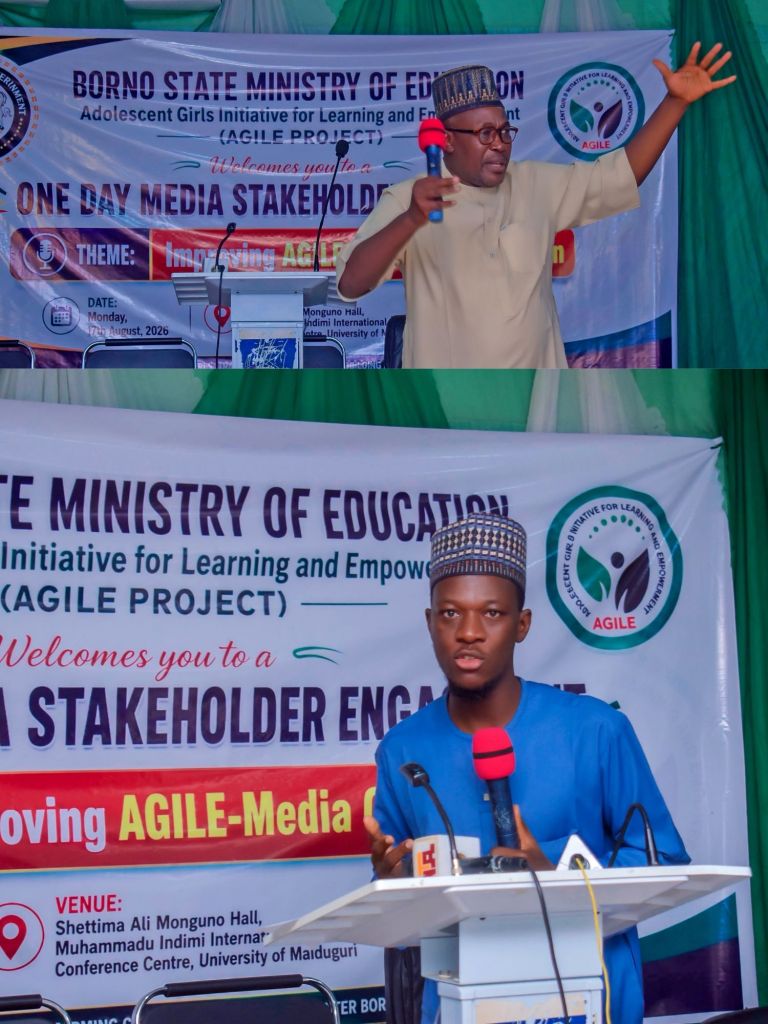
Declaring the workshop open, the Borno AGILE Coordinator, Engr. Ibrahim Baba, stressed that the media remains a vital catalyst for driving community mobilization and shifting deep-seated social norms.
Baba noted that robust journalism is essential for spotlighting structural impediments to enrollment and completion, while simultaneously creating awareness around ongoing government interventions.
Highlighting the project’s scope, Baba disclosed that AGILE is actively providing “second-chance” learning opportunities for dropouts, expanding physical infrastructure by constructing junior and senior secondary schools closer to grassroots communities, and equipping over one million girls with critical life skills, financial literacy, and digital competencies for the modern workforce.
The Northern Education Deficit
The urgency of the media partnership was underscored by Malam Muhammad Auwal, who presented an overview of the region’s educational hurdles. Auwal revealed that approximately 7.6 million school-aged girls remain out of school nationwide, with nearly half of that total concentrated in Northern Nigeria.
He attributed the grim statistics to intersecting crises, including endemic poverty, early marriages, harmful cultural practices, and unsafe learning environments.
“Journalists must look beyond surface reporting and interrogate the socio-cultural factors limiting girls’ access to learning,” Auwal said. He further advocated for robust community-level engagement, noting that enlisting the influence of traditional, religious, and community leaders is non-negotiable if families are to shift their priorities toward keeping daughters in school.
Shifting parental attitudes
Echoing similar sentiments, the training consultant, Dr. Musa Konduga, emphasized that legislative policies alone cannot suffice without winning the psychological buy-in of parents.
Konduga charged Northern state governments to aggressively pursue community- and family-based engagement frameworks designed to re-value girl-child education at the household level. He urged participants to leverage the insights gained from the workshop to produce deeply localized, human-interest narratives that reflect the realities of affected communities across Borno State.
The strategic convening brought together frontline reporters, editors, and key education stakeholders, marking a concerted push to bridge the information gap and ensure AGILE’s interventions yield maximum impact for vulnerable adolescents in the insurgency-recovering state.
Speaking earlier, the chairman of the Nigeria Union of Journalists, Borno State council, Comrade Abdulkareem Haruna, commended AGILE for convening the media stakeholders engagement even as he emphasized the commitment of the journalists’ body in ensuring that the girl child gets the deserved attention for education. He further urged AGILE to always mainstream journalists at the early stages of their project plans for easy and better publicity and effective awareness creation.

“The media plays a critical role in giving limelight to projects like AGILE, it would be a defeated effort if they are not carried along in such projects at the stages of planning and actual execution,” Ambassador Abdulkareem said.
“AGILE has done so much that it cannot be ignored . We need to mobilise the media even at this moment to document beneficiary experiences for impact reporting,” the NUJ chairman said.
 The Humanitarian Times
Leave a comment