By Abdulkareem Haruna
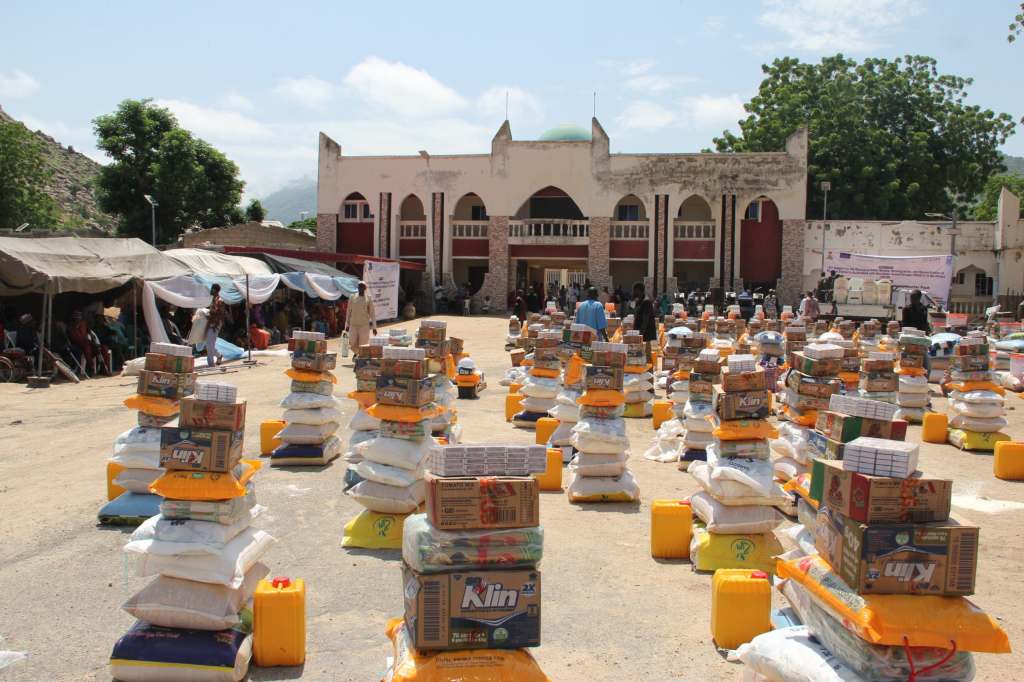
The Allamin Foundation for Peace and Development has on Wednesday, July 23,2026 empowered 300 residents in Gwoza Local Government Area of Borno State with vocational livelihood starter kits.
The initiative, supported by the European Union (EU) and the United Nations Development Programme (UNDP) marks a critical phase in the Disengagement, Review, Reintegration, and Reconciliation (DRRR) programme.
Designed to bridge the gap between conflict trauma and socio-economic recovery, the intervention targets a mix of returnees, internally displaced persons (IDPs), and members of host communities.
The graduation ceremony, which also featured a cultural display was designed to foster social cohesion, saw beneficiaries receive tools tailored to their specific vocational training – ranging from agriculture and tailoring to trade and artisanal skills.
A Path to Sustainable Peace
Speaking at the event, the Executive Director of the Allamin Foundation, Hamsatu Allamin, emphasized that the programme is rooted in the belief that economic stability is the bedrock of lasting peace.
“The programme is intended to provide beneficiaries with sustainable means of livelihood, reduce economic vulnerability, and strengthen community acceptance for lasting peace and stability,” Hajia Allamin stated.
She noted that the Foundation had carefully matched the kits to the specific needs of each participant to ensure long-term viability.
“The initiative reflects the Foundation’s commitment to empowering communities while fostering reconciliation and rebuilding trust among conflict-affected populations,” she added.
Data from the foundation indicates that of the 300 beneficiaries, 176 are women and 124 are men, with a demographic split of 100 returnees and 200 members of the host communities.
“We have it as a matter of policy to empower two community members for every single support given to a person formerly associated with non-state actors,” the executive director said.
Traditional leaders back reintegration
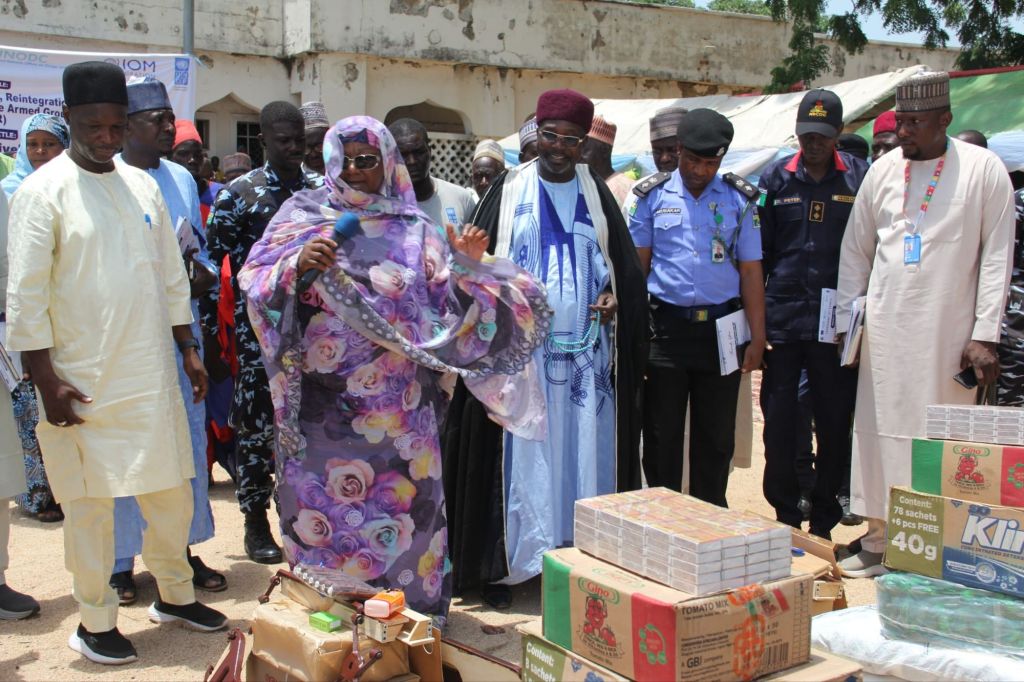
The Emir of Gwoza, Mohammed Shehu Idrisa Timta, who was a special guest and royal father at the event lauded the foundation and its international partners for the intervention. The traditional ruler highlighted the importance of non-discriminatory support in a region where many were forced into insurgent activities under duress.
“Many victims of the insurgency were recruited into armed groups under duress, making rehabilitation and reintegration programmes essential components of long-term peacebuilding,” the Emir remarked.
Addressing the beneficiaries, the monarch urged patience for those not included in this phase, assuring them that the DRRR programme is designed to scale.
“I encourage the beneficiaries to make productive use of the livelihood kits by establishing sustainable businesses capable of improving their standard of living and contributing to the local economy,” he said.
Government and stakeholder synergy
The Borno State Government, which has prioritized the RRR (Reintegration, Rehabilitation, and Resettlement) framework, expressed continued support for the initiative.
Engineer Ali Goni, the Adviser to the Borno State Governor on RRR, commended the collaborative model, noting that such public-private partnerships are vital to closing the recovery gap.
Speaking in the same vein, the Chairman of Gwoza Local Government Area, Abba Kawu Idrisa Timta, described economic empowerment as “one of the most effective strategies for reducing poverty, preventing crime, and promoting self-reliance.”
Dr. Mallam Umar Maigari, a senior member of the Allamin Foundation, framed the event within the broader context of transitional justice.
“The programme combines community engagement, vocational training, reconciliation activities, and the distribution of starter kits to promote inclusive recovery in conflict-affected communities,” Dr. Maigari explained.
Cultural renewal
The event concluded with a cultural festival featuring performances by the Hambagda and Glavda clans, alongside traditional warrior displays. Organizers stated that the festival served a dual purpose: celebrating the region’s resilience and using cultural platforms to mend social fabrics frayed by years of insecurity.
Beneficiaries at the ceremony pledged to utilize the equipment to grow their household incomes, marking a hopeful departure from the cycle of dependency that often follows displacement.
 The Humanitarian Times
Leave a comment