By Abdulkareem Haruna
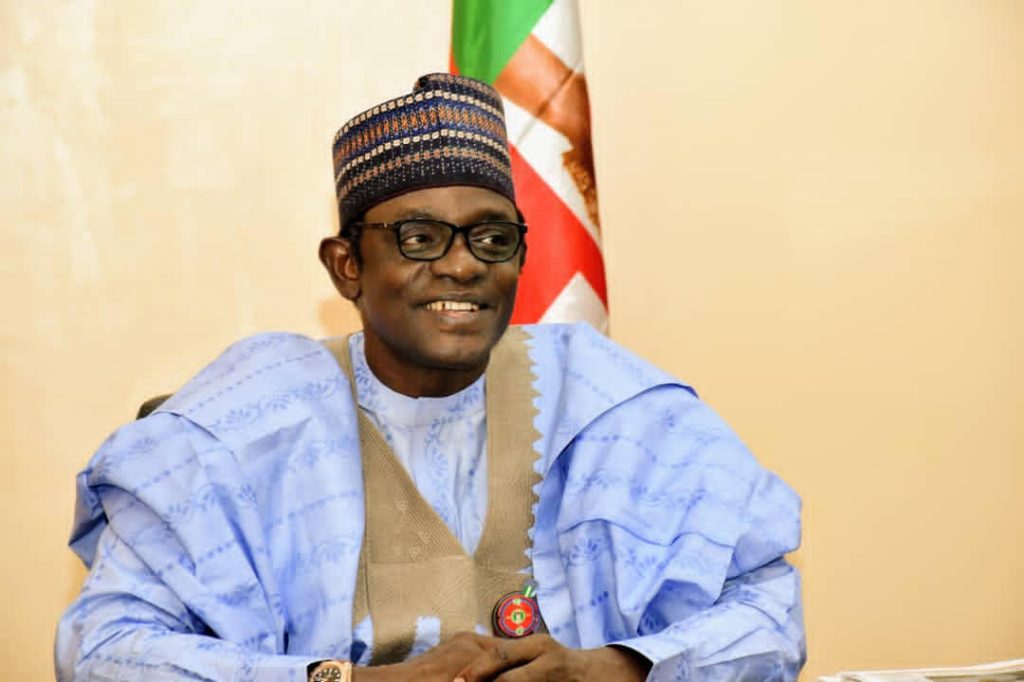
On Friday, May 29, 2026, the Governor of Yobe State, Mai Mala Buni, marked his seventh year in office as the fourth democratically elected executive governor of the state since the return of democracy in 1999.
Moving away from the traditions of the past, the Yobe State government did not roll out the drums to serenade the public with pomp and pageantry. Instead, officials led by the Secretary to the State Government (SSG), Hon. Mohammed Goje, and the Commissioner of Information, Abdullahi Bego, engaged the media, civil society, and key government functionaries to review the milestones of completed projects and assess the status of ongoing ones.
Guided by six pillars—continuity, post-conflict recovery, inclusive development, institutional and system strengthening, peacebuilding, and strategic investments in critical sectors – Governor Buni utilized the first half of his tenure to conceptualize and strategize a blueprint that has become the compass of his administration.
A tour of critical infrastructure within the capital city of Damaturu revealed an array of ongoing civil engineering projects, including a network of roads, a multi-layered overhead bridge, essential office structures, and significant investments in health sector infrastructure, equipment, and human resources.
The Commissioner of Home Affairs, Information, and Culture, Abdullahi Bego, noted at the beginning of the tour that “Yobe State, under His Excellency Governor Mai Mala Buni, has emerged as a model of resilience, prudent leadership, political stability, and purposeful governance.”
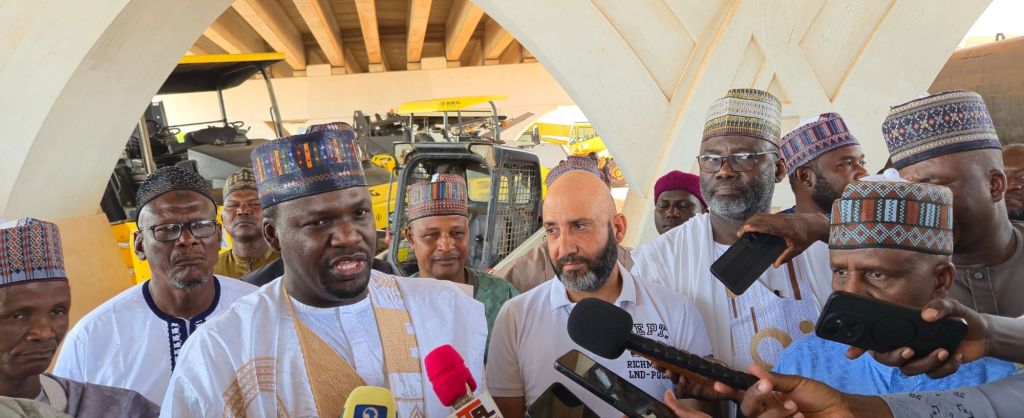
Speaking at the anniversary press briefing at the Governor’s Office in Damaturu, the acting SSG, representing the Governor, stated that the administration “came with a clear vision.” He added, “Today, seven years later, the results are visible across every sector of the state.”
The SSG emphasized that amidst all pressing issues, the government has prioritized security above all else. The administration has anchored its governance on measurable outcomes, shifting Yobe State from a phase of post-insurgency recovery to one of structured development. The Secretary to the State Government, Alhaji Baba Malam Wali, emphasized that the state’s progress is built on intentional, data-backed interventions. “Our roadmap is simple: identify the deficit, provide the infrastructure, and ensure sustainability,” he remarked. “Whether it is the thousands of homes built or the hundreds of health facilities established, every decision is designed to yield a tangible dividend for the citizens of Yobe.”
In the security sector, the government has provided over 200 motorcycles and 60 patrol vehicles to security agencies and local response teams, while more than 100 senior and middle-level officials have received specialized intelligence training. Infrastructure development is marked by over 500 kilometers of road projects—including the 26-kilometer Damaturu–Kalallawa road and the 34-kilometer Jajere–Danchuwa corridor—complemented by the procurement of 20 new buses for the state transport corporation.
The education sector has seen the construction of seven mega schools and seven model schools, alongside the establishment of 17 new secondary institutions, the recruitment of over 4,000 staff, and state scholarship support for 48,000 students.
In the healthcare delivery sector, the state has completed 140 primary healthcare centers, procured 88 tricycle ambulances, and constructed a 300-bed maternal and child health complex. These efforts are supported by a state insurance scheme covering 350,000 residents and a ₦2.3 billion investment in medical supplies.
Housing remains central to the administration’s economic strategy, with 2,350 housing units delivered across all 17 local government areas to address residential deficits. To drive food security, the government has invested ₦15.3 billion in agricultural inputs for 5,340 farmers, procured over 100 tractors for mechanization, and distributed 9,000 metric tonnes of subsidized fertilizer.
”We are not just talking about bricks and mortar; we are talking about restoring the dignity and hope of our people through consistent, data-driven results,” the SSG added. “Today, our schools are fully operational, our markets are thriving, and our citizens are rebuilding productive livelihoods in an atmosphere of renewed peace and stability.”
 The Humanitarian Times
Leave a comment