By Abdulkareem Haruna
No fewer than 27 persons have been confirmed dead, while 2,715 suspected cases of cholera have been recorded across five Local Government Areas (LGAs) of Borno State within the first 24 days of May.
The data, contained in an official epidemiological summary obtained by our reporter reveals a rapidly escalating public health situation, with hundreds of new suspected cases reported within a single 24-hour cycle.
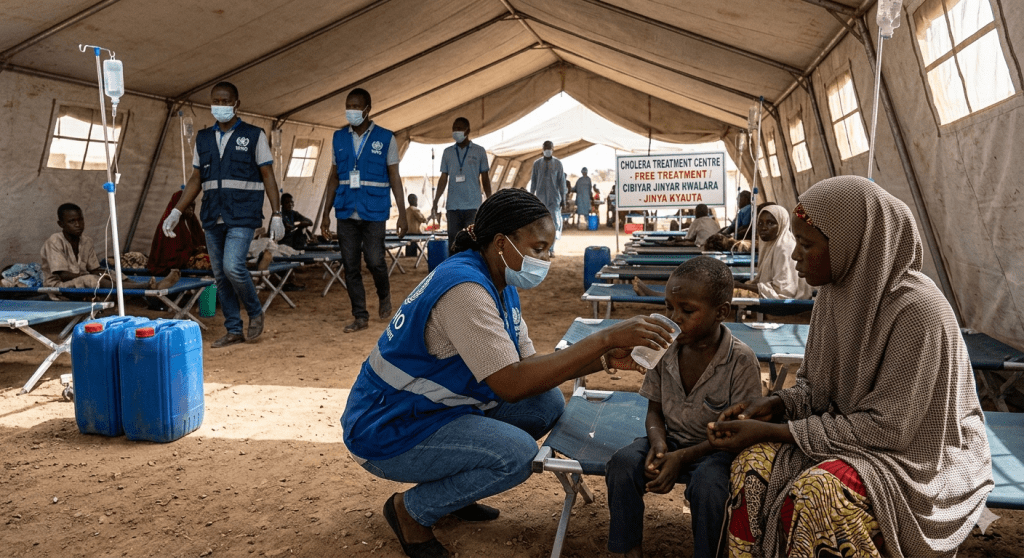
Medical officials have warned that the current case count of 2,715 remains conservative, noting that “data from several Cholera Treatment Centres (CTCs) and Oral Rehydration Points (ORPs) are yet to be fully integrated into the official database.”
There are palpable fears among residents that infections could spike further during the upcoming festive season, a situation worsened by the failure of the state Ministry of Health to issue an official public alert.
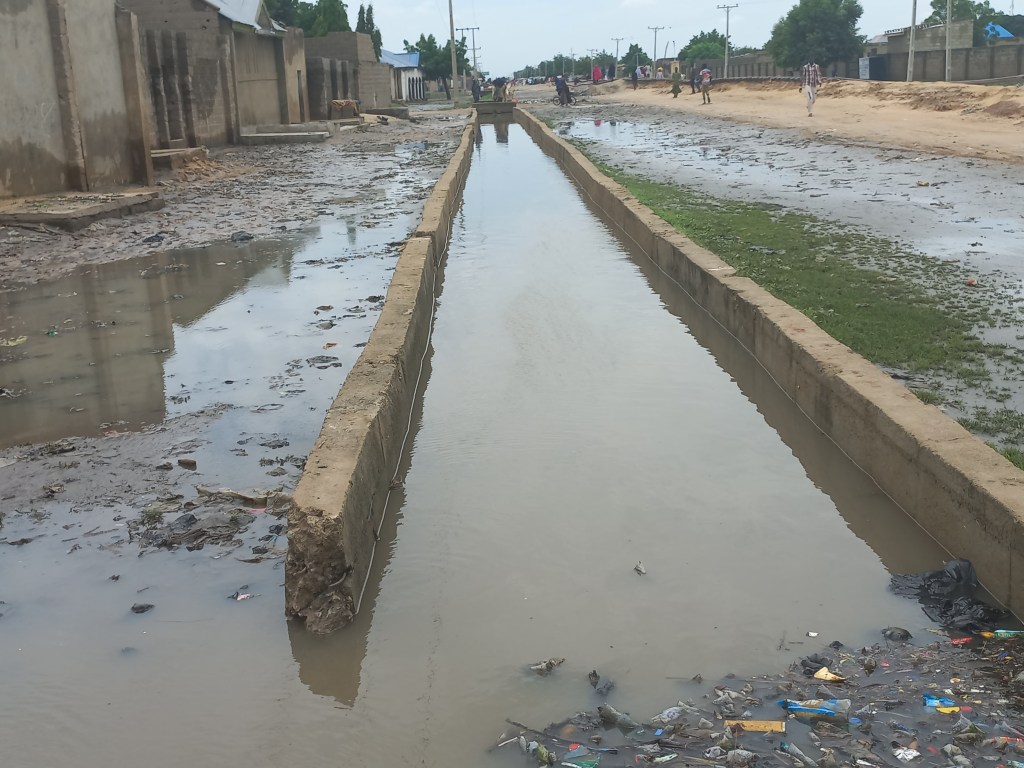
Health officials disclosed to The Humanitarian Times that the outbreak was primarily caused by water contamination, which occurred where sewage wrongly connected from public drainage systems entered broken water-reticulation pipes.
In December last year a similar case of suspected cholera outbreak was reported in some of the neighbourhoods in central parts of Maiduguri which was reported to have been caused by sewage water contamination.
Affected areas
The Humanitarian Times gathered that the outbreak has penetrated at least 29 wards and 124 different communities across the state. The Maiduguri Metropolitan Council (MMC) stands as the epicenter of the crisis, accounting for more than half of the total burden with 1,568 cases.
A breakdown of the affected cases across the local government areas shows that Jere follows closely with 834 cases, Mafa recorded 159 cases, Konduga has 95 cases, while Monguno recorded 56 cases. Other areas include Ngala with two cases and Magumeri with one case.
Of the 27 fatalities documented so far, 11 occurred within local communities, highlighting potential gaps in early healthcare access and emergency response. The remaining 16 deaths were recorded inside designated health facilities.
The Case Fatality Rate (CFR) currently stands at 1%, which touches the World Health Organization’s (WHO) emergency threshold requiring immediate, scaled-up intervention.
On laboratory diagnostics, a total of 35 Rapid Diagnostic Test (RDT) positive cases have been recorded, while 14 cases have been strictly confirmed through National Reference Laboratory (NRL) testing.
Health workers lament
Meanwhile, health workers, particularly within the non-governmental sector, have expressed deep concern over the state government’s delay in declaring a public health emergency and launching a massive public awareness campaign to contain the spread.
Speaking on the condition of anonymity because they were not authorized to talk to the media, a health worker lamented the situation.
“What the government, especially the ministry of health is supposed to do at this critical moment is call a press conference and declare a cholera outbreak so that residents can take measures to safeguard themselves. But this is not being done,” the source said.
Efforts to get the reaction of the Borno State Commissioner for Health and Human Services, Professor Baba Malam Gana, proved abortive as calls and text messages sent to his mobile phone were neither acknowledged nor returned at the time of filing this report.
To prevent such occurrences, the Borno State Governor criminalized the construction of soakaway pits on Maiduguri streets during his first term, mandating that they be built within property boundaries. Despite this, many residents continue to flout the law, with some going as far as channelling their latrine pipes directly into public drains.
Other concerned health officials also blamed the state water board for ignoring broken pipes, despite repeated attempts to alert them.
 The Humanitarian Times
Leave a comment