By Abdulkareem Haruna
MAIDUGURI, Nigeria — In a continued bid to tackle the endemic complexities surrounding land tenure and mitigate frequent property disputes in Borno State, stakeholders have this week converged in Maiduguri for a crucial two-day town hall meeting focused on systematic land titling.
The event, organized by Rehabilitation, Empowerment and Better Health Initiative (REBHI), in collaboration with the African Cities Research Consortium (ACRC) and the Borno state government aims to fast-track urban land reforms and protect vulnerable residents from systemic exploitation.
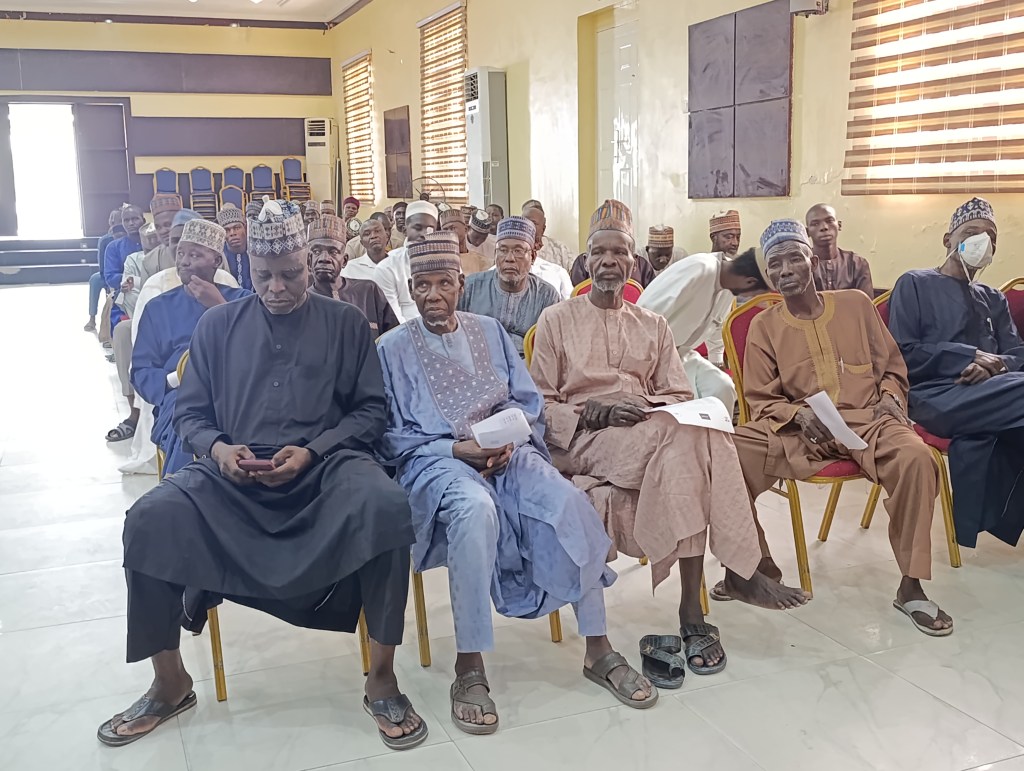
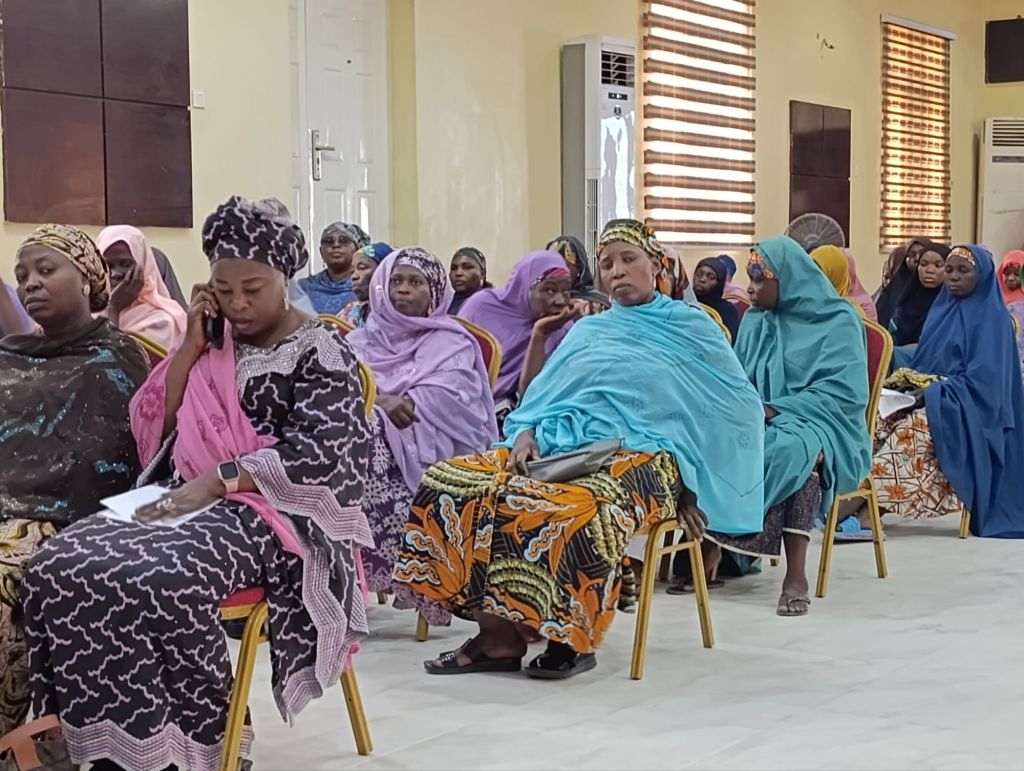
Separately held at the White Arena Event Centre on Wednesday and Thursday, in Maiduguri, Borno state capital, the high-level engagements were structured as a consecutive two-day programmatic intervention targeting two critical municipal operational areas: Bolori and Galtimari Wards.
Unlocking the land identity crisis
Maiduguri, the largest urban centre in Northeast Nigeria, has long grappled with deep-seated structural issues tied to land administration. Years of conflict and mass displacement have exacerbated informal settlement expansion, leading to aggressive land contestations, arbitrary evictions, and a severe deficit in formal documentation.
The Executive Director of REBHI, Ms Ajikatu Imam, set the tone for the engagement during the introductory phase, noting that bridging the governance gap in land administration requires an aggressive, multi-stakeholder collaborative framework which her organisation is facilitating as a project which is an initiative backed by the African Cities Research Consortium (ACRC), a major international research body established to tackle the complex, systemic, and political challenges facing rapidly growing cities across sub-Saharan Africa.
Detailing the foundational scope of the initiative, Professor Abubakar Monguno, highlighted the core objectives of the city-wide rollout. He emphasized that navigating the intricate systems of the city requires data-backed action research that aligns statutory civil procedures with community-level realities.
Expanding on this structural vision, Dr Babakura Bukar, an expert representing the ACRC, unpacked the consortium’s overarching diagnostic framework for Maiduguri. Dr Bukar explained how treating the “city as a system” allows researchers and local coalitions to unpack the political and structural bottlenecks stalling urban progression.
Funded by UK aid from the Foreign, Commonwealth & Development Office (FCDO) and led by the University of Manchester’s Global Development Institute, Dr Bukar said “the consortium brings together a vast network of research institutions, think tanks, and civil society organizations.”
ACRC operates on the principle that cities are dynamic political systems; therefore, unlocking their economic and developmental potential requires moving past traditional sector silos to understand the unique political economy of individual urban centers.
“To turn research into meaningful, localized action, the consortium focuses on eight key urban development domains—including housing, informal settlements, land connectivity, and safety. ACRC’s methodology integrates comprehensive systems thinking with rigorous political analysis to identify intractable structural bottlenecks in major African hubs like Maiduguri. Rather than imposing top-down solutions, the organization works directly with local community groups, municipal authorities, and “urban reform coalitions” to co-produce knowledge and implement practical, equitable reforms that fundamentally improve the life chances of marginalized urban populations.”
Legal Bottlenecks and Systematic Titling
A major focal point of the town hall centered on navigating the rigid statutory legal framework governing real estate and development in the state.
Delivering a technical presentation on “Legal Issues in Land Administration,” Barrister Mustapha Ibrahim, a legal practitioner from the Borno Geographic Information Service (BOGIS), outlined the systematic bottlenecks built into traditional conveyance systems. Barrister Ibrahim underscored how administrative opacity and lack of legal awareness often expose low-income earners to predatory property cartels. Stressing that SLT brings about an end to such vulnerabilities as it offers opportunities for people to easily upgrade their titles away from the customary land ownership documents.
To counter these vulnerabilities, Babagana Hassan detailed the ongoing mechanics of the Systematic Land Titling Project (SLTP). The project, which leverages strategic institutional alignments, seeks to scale up the registration of properties, reduce processing times, and formally integrate residents of informal settlements into the formal economy.
“Land registration should not be an exclusive luxury for the elite,” an official close to the project told The Humnaitarian Times on the sidelines of the event. “By simplifying adjudication mechanisms, we are actively protecting the inheritance and assets of marginalized urban populations, particularly women.”
The Traditional and Civil Coalition
The town hall strongly emphasized the institutional weight of traditional leadership in ensuring the success of modern land reforms.
Speaking on the role of traditional institutions within the SLTP framework, the District Head of Bolori, Ibrahim Wadaima Abba Yusuf, and that of Galtimari, Zannah Lawan Kareto both noted that community chiefs and elders act as primary arbiters in land allocation and local dispute resolution. The traditional rulers maintained that a statutory land registration drive cannot succeed without leveraging the historic legitimacy of community-level custodians. Thereby the two monarchs announced their commitments to support the SLT project by wavering all administrative charges around processing land documents.
“We have come to an era where everything has to be registered. Even we as humans have to get our NIN, BVN, talk more about properties. This is to show that both we citizens and our property all belong to the government,” said the District Head of Galtimari
Simultaneously, the advocacy and monitoring arm of the project was reinforced by civil society networks. Bulama Abiso, a notable activist leader, mapped out the framework for the “Reform Coalition in SLTP”. Comrade Abiso charged community organizers and local residents to form defensive civic alliances to monitor land documentation pipelines and resist illegal allocations.
Resolving Deep-Seated Conflicts
The technical sessions gave way to an interactive, high-stakes panel moderated by Haruna Ayuba, a professor who steered a robust question-and-answer session. Residents from both Bolori and Galtimari wards raised direct grievances concerning overlapping land claims, slow processing times by state geographic agencies, the place of inherited land and SLT as well as the high cost of formal regularisation.
Recognizing that structural reforms often spark immediate, localized frictions, the organizers activated an ad-hoc mediation mechanism.
Following the main assembly, an extraordinary side meeting was convened by the Conflict Resolution Committee, led by Ahmed Shehu, a diplomatic envoy. Ambassador Shehu’s closed-door session focused on designing rapid-response mediation pathways to handle communal land tensions without overwhelming the already strained formal judicial system.
The two-day town hall concluded with a formal synthesis of community demands, which organizers stated would be converted into an actionable policy brief aimed at strengthening urban governance and securing land tenure safety across Borno State.
 The Humanitarian Times
Leave a comment