By Abdulkareem Haruna
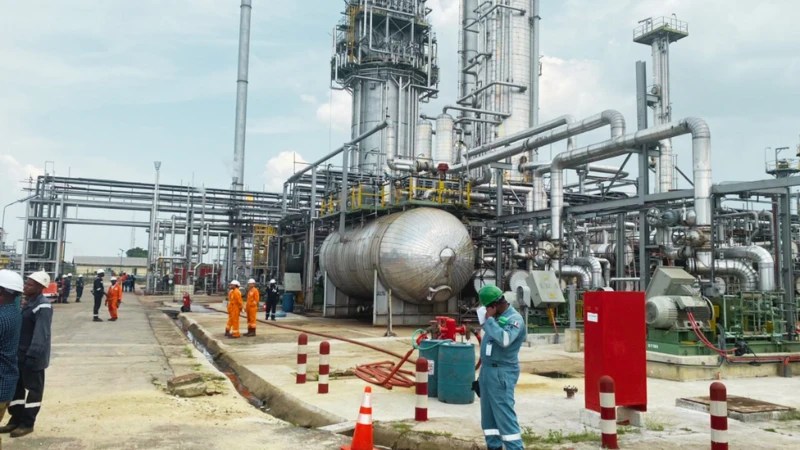
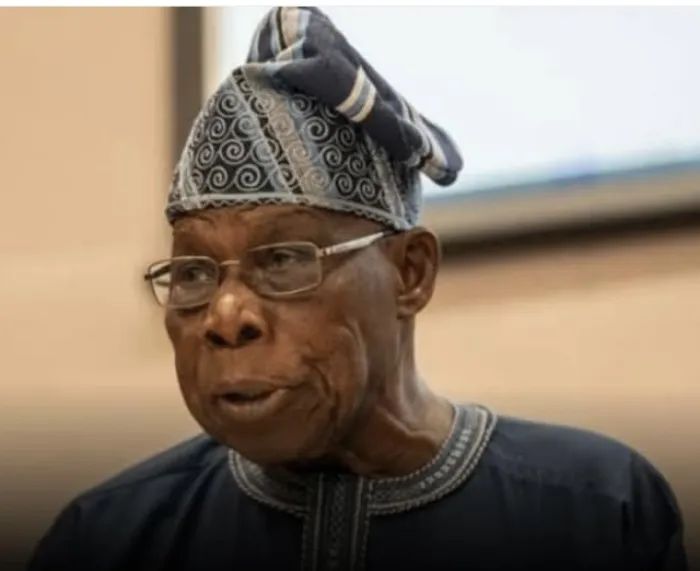
As the Nigerian National Petroleum Company (NNPCL) Limited intensifies its search for technical partners to manage the Port Harcourt, Warri, and Kaduna refineries, former President Olusegun Obasanjo has delivered a grim verdict: the facilities are beyond redemption under the current government-led framework.
Speaking during a television interview on Sony Irabor Live monitored by The Humanitarian Times, the former president slammed the persistent attempts to resuscitate the refineries, describing them as an exercise in futility fueled by corruption and structural inefficiencies.
The ‘Success’ of NLNG vs. The ‘Failure’ of NNPC
Mr Obasanjo argued that the primary reason the NNPC’s downstream assets remain moribund is the government’s refusal to cede control to the private sector. He pointed to the Nigeria Liquefied Natural Gas (NLNG) project as the gold standard for how the oil and gas sector should be managed.
“One of the lessons that I learnt is that PPP (public-private partnership) works. Look, one project that has not been destroyed by the government in Nigeria is the NLNG, where the private sector has 51 per cent, and the Nigerian government has 49 per cent,” he said.
Contrastingly, he noted that the NNPC’s insistence on holding onto the refineries has led to their decay, comparing the situation to the defunct Nigerian railways and the national shipping company.
“The NNPC has refineries, and I said to people that it will never work. And a man had the audacity to say, ‘Am I a chemical engineer?’” Mr Obasanjo quipped, mocking the dismissal of his expert-backed warnings.
Four Reasons Why Global Giants Shunned the Refineries
The former president provided a rare insight into his administration’s failed attempts to woo Shell, a global energy giant, into taking over the management of the facilities. Despite offering Shell a 10 per cent equity stake, or even a pure management contract without equity, the firm flatly declined.
Mr Obasanjo recounted a private conversation with a top Shell official who outlined four systemic reasons why the refineries are unviable:
Low Profit Margins: Shell noted that global oil giants make their profits in the upstream sector. Downstream operations (refining) are often treated as a service with razor-thin margins, making Nigeria’s inefficient plants unattractive.
Lack of Scale: The refineries are too small to be competitive. While modern refineries operate at capacities of 250,000 to 300,000 barrels per day, Nigeria’s plants range from a meager 60,000 to 100,000 barrels.
Technical Rot: The facilities have been gutted by poor maintenance. “We call quacks and amateurs to come and maintain our refineries. The refineries are not in good order,” the official told Mr Obasanjo.
Systemic Corruption: The most damning reason provided was the “too much corruption” surrounding the refineries, a reality Shell was unwilling to be associated with.
The Dangote Deception
Mr Obasanjo recalled that towards the end of his tenure, he believed he had found a lifeline when Aliko Dangote, President of the Dangote Group, offered $750 million for a 51 per cent stake in two of the facilities.
However, that deal—which Mr Obasanjo viewed as the only way to save the assets—was famously reversed by his successor, Umaru Musa Yar’Adua, under pressure from labor unions and vested interests.
Decades later, with billions of dollars spent on “Turnaround Maintenance” (TAM) yielding zero petrol, Mr Obasanjo’s warning resonates: as long as the NNPC maintains its current structure, Nigeria’s state-owned refineries may remain nothing more than expensive monuments to failure.
 The Humanitarian Times
Leave a comment