By Abdulkareem Haruna
This article may not sit well with some people, but the cold fact must be stated. Our people suffer because they lack knowledge. Many of them don’t know that it’s now very easy to cross the line from being a businessman to being a criminal – and the price for that mistake is higher than ever.
For years, the global community viewed “protection payments” in conflict zones as a regrettable, if necessary, cost of doing business.
A recent landmark court judgment against the French cement giant, Lafarge, has shattered that illusion, providing a sobering blueprint for accountability that country like Nigeria, and specifically the communities in the Northeast, can no longer afford to ignore, but learnt from.
On April 13, 2026, a French court delivered a historic blow to the culture of corporate impunity. Lafarge S.A. was fined the maximum criminal penalty and its former CEO, Bruno Lafont, was sentenced to six years in prison for financing terrorism.
You may want to ask, what was Lafarge’s crime?
Between 2013 and 2014, Lafarge was accused of paying nearly $6 million to intermediaries and terrorist groups – including ISIS – to keep its cement plant in Syria operational. Of course, Lafarge did not attend a fund raising dinner to make that contribution to terrorist fund raisers. But they paid those monies so that the ISIS terrorists would allow their staff access their factory and continue to operate despite the war in Syria. What they paid was like a fine or tax to ISIS. And Lafarge even argued that the payment they made was necessary because they don’t want to jeopardize the interest of the local workers who would be jobless should they pack up their tools and leave Syria and avoid paying those money.
But the court’s message was unequivocal: there is no “indirect” funding of terror. When you pay for access, you pay for the bullets. When you trade for profit, you trade in lives.
Now let’s compare what happened in Syria to activities in Girei (Jilli): and let’s analyse the Oxygen of Insurgency.
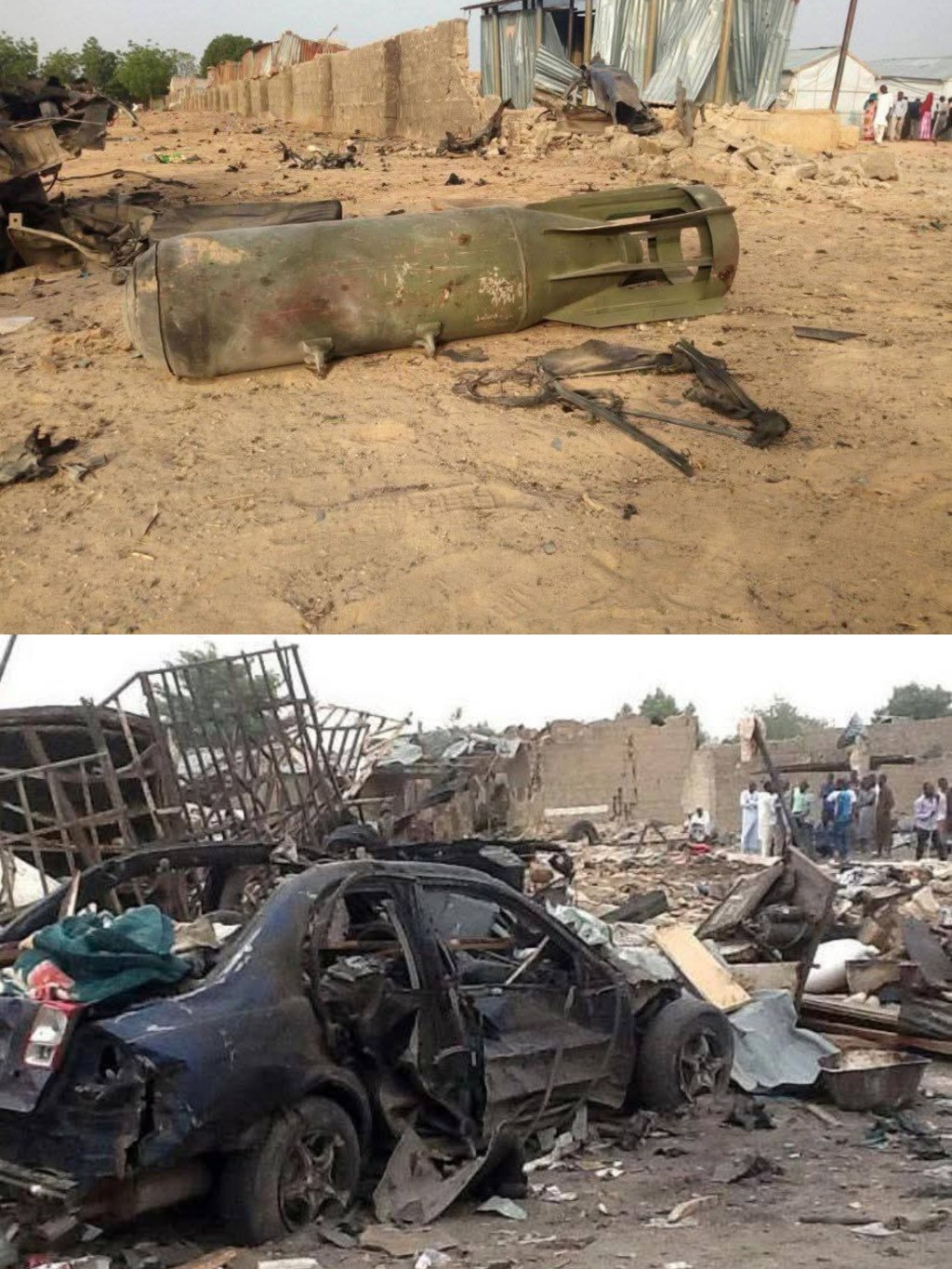
This global legal shift must now be mirrored in our local consciousness. In the Northeast of Nigeria, the recent tragedy at the Jilli weekly market near the Borno-Yobe border – often referred to as the Girei axis – should serve as a lesson class for those that have sense.
While the Nigerian Air Force strike on Saturday, April 11, resulted in a heartbreaking loss of civilian life, and I personally empathised with the innocent ones caught in the crossfire, it has also exposed a thriving ecosystem of insurgency commerce.
Girei has long been identified as a Boko Haram stronghold. As a matter of fact the Borno state government under Professor Babagana Zulum had banned operating that market five years ago because it serves only the interest of Boko Haram; yet the market continues to flourish. You may want to ask why? The answer is simple: Because local traders find a ready, high-paying clientele in the insurgents. In these remote hubs, goods are sold at inflated prices to those who live outside the law. To the trader, it is just business.
To the community, it is a swift profit. But to the insurgent, it is the logistical lifeline – the food, fuel, and supplies – that keeps the machinery of terror running.
The Myth of Neutrality
It is high time we need to call it what it really is; and stop sugarcoating the crime. Selling to Boko Haram is not “survivalist trade”; it is the provision of material support for terror. Paying ransom is NOT merely a “personal tragedy”; it is a direct injection of capital into a criminal enterprise.
As the Lafarge case in Syria proves, the law is increasingly uninterested in your motives – it is interested in your impact. Under the Nigeria Terrorism (Prevention and Prohibition) Act, “indirectly” rendering support to a proscribed group is a felony that carries severe prison terms.
A Call for Moral Clarity
If a multinational corporation like Lafarge, with a phalanx of best lawyers, cannot escape the reach of justice for funding terror, what makes the local trader in Jilli think they are exempt? It is sad that they got their punishment not through the courts of law but from the fire of an Air force jet. Sympathy to the innocent lives lost.
We have to educate our people in knowing that every bag of grain sold to an insurgent, every liter of petrol provided for their motorcycles, and every naira paid in “tax” to an outlawed group like ISWAP or Boko Haram provides the oxygen they need to breathe.
The Jilli incident is a tragedy, but it must also be a turning point. We cannot claim to want peace while we are the ones financing the war through our transactions. It is time to recognize that in the fight against Boko Haram, your wallet is as much a weapon as a soldier’s rifle. Commerce with terror is not business – it is a betrayal of the state and its people.
 The Humanitarian Times
Leave a comment