By Abdulkareem Haruna
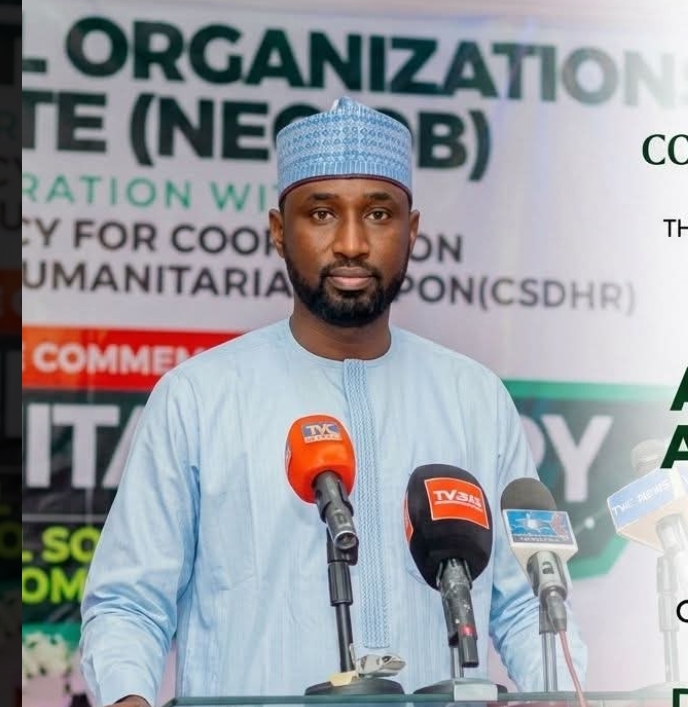
MAIDUGURI, NIGERIA – The Network of Civil Society Organizations of Borno State (NECSOB) has ushered in a new leadership era following a high-tech, bi-annual election that saw Mr. Abubakar Abdullahi Suleiman emerged as the substantive Executive Director.
The transition, described by observers as a “seamless digital shift,” was conducted via a secure virtual platform where accredited members cast their votes electronically. In a sharp departure from traditional, lengthy manual sorting, the results were articulated and declared within just one hour of the polls closing.
A New Vision for Impact
Accepting the mandate, Mr. Suleiman—who also serves as the Executive Director of the Center for Social Cohesion, Peace, and Empowerment (CENSECO)—declared the dawn of a “results-driven” era.
“This moment marks a new foundation for our community,” Suleiman told the assembly. “As the ‘voice of the voiceless,’ the Network will move beyond mere representation to focus on structured influence and coordination leadership.”
Suleiman’s roadmap for the network centers on a four-year strategic plan designed to transform NECSOB into a cohesive ecosystem.
He said key pillars of his administration would include:
“Institutional Reform: Establishing a centralized data hub and a statewide coordination platform. Strengthening dialogue forums with government actors and development partners; Leveraging technology to amplify the concerns of displaced populations and marginalized groups. Creating leadership pathways specifically for women, youth, and Persons with Disabilities (PWDs).
The Push for Localization
The outgoing Executive Director, Comrade Bulama Abiso, praised the transparency of the process, suggesting that NECSOB’s electronic model should serve as a blueprint for national electoral reforms in Nigeria.
However, Abiso issued a stern parting challenge to the new executive team regarding the “localization” of humanitarian aid. He noted that while local NGOs possess the cultural context and linguistic proximity to serve Borno’s communities, they continue to receive a fraction of the funding compared to international agencies.
“I urge the incoming team to ensure local organizations are positioned to lead,”Abiso said. “By putting local actors at the forefront, we ensure that development truly reaches the people who need it most.”
Addressing the Security Crisis
Acknowledging the ongoing security challenges in the region, Suleiman pledged that his tenure would prioritize the dignity of displaced populations. He committed to a “bottom-up” consultation structure, ensuring that victims of the crisis are active participants in decision-making processes rather than passive recipients of aid.
The election of Suleiman is seen by many in the sector as a strategic move to professionalize the network. “Leadership is about building systems and generating impact,” Suleiman concluded. “Together, we will achieve the future our people deserve.”
 The Humanitarian Times
Leave a comment