By Abdulkareem Haruna
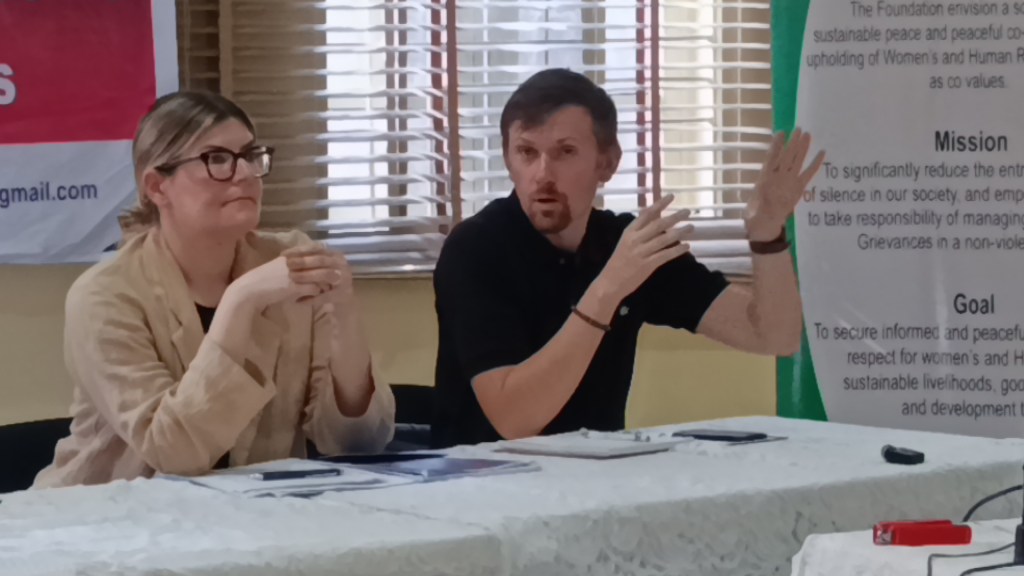
Diplomatic representatives from the Embassy of Canada met with regional stakeholders Wednesday to evaluate the progress of grassroots deradicalization and social cohesion programs in Borno State, focusing on the precarious future of children formerly associated with armed groups.
The delegation, led by First Political Officer, Maude Oliver under the Canada Fund for Local Initiatives (CFLI), visited the Allamin Foundation for Peace and Development in Maiduguri. The high-level meeting served as a field assessment for the project,
“Bridging the Gaps of Sustainable Peace and Reconciliation,” which targets the Maiduguri Metropolitan Council (MMC) and Jere Local Government Areas.
A central focus of the dialogue was the findings of initial research conducted at the project’s inception. The study, which surveyed 40 children spouses of surrendered or deradicalized Boko Haram members, revealed a harrowing landscape of social isolation.
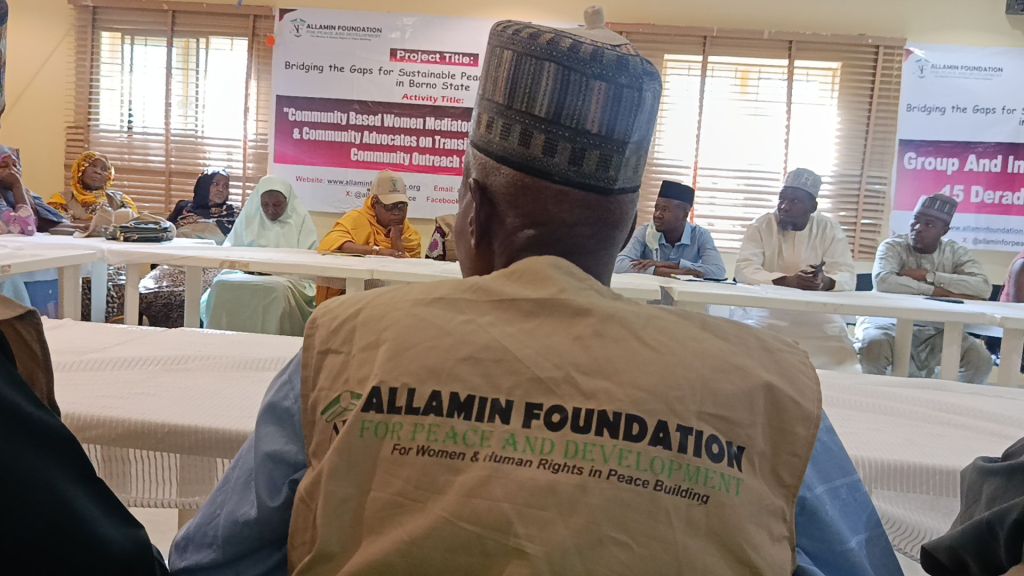
The result indicates that though these children live in communities, they are highly vulnerable to being used as vessels for Boko Haram attacks,” the Foundation reported during the briefing. “Most of them either feel stigmatized or don’t care about life and what the future holds for them.”
In response to these findings, the project has established the Community Women Mediators Forum (COWOMF) and expanded the reach of Community Advocates on Transitional Justice (CATJ).
These structures are designed to facilitate child-centered reintegration and soften community resistance toward the children of former combatants.
A Debate on Balanced Support
During a robust interactive session, the Canadian delegation questioned stakeholders on the long-term viability and ethics of providing continuous aid to the offspring of former non-state armed actors.
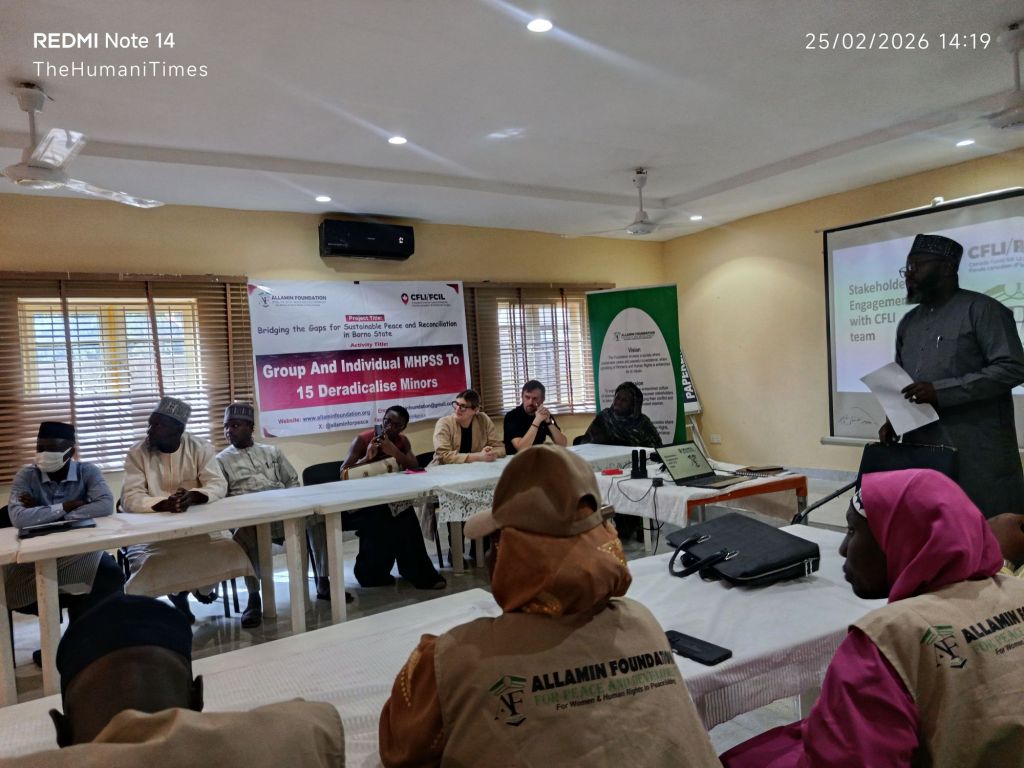
While stakeholders defended the necessity of the support due to the “fragility of the situation,” they acknowledged the need for a balanced approach.
“The approach should also be victim-centered,” stakeholders noted during the session, emphasizing that while reintegration is vital for security, the needs of those harmed by the insurgency must remain a priority.
Hamsatu Allamin, Executive Director of the Allamin Foundation, provided a metric of success to counter concerns of stagnation, noting that the initiative has already facilitated school enrollment or vocational training for approximately 15 children in the high-risk category.
Mr Oliver, having listened to the contributions of the stakeholders, noted that it is an integral policy of the CFLI to transform lives through its “Small Numbers, Big Impact” initiative, proving that focused community investment and government support can turn 15 vulnerable children into powerful success stories.
“We chose this path because these children are very isolated; they often don’t feel they have a community that loves them or wants them to belong. Having the mediation team and community leaders here today shows them that a community does care, which is vital for their future.
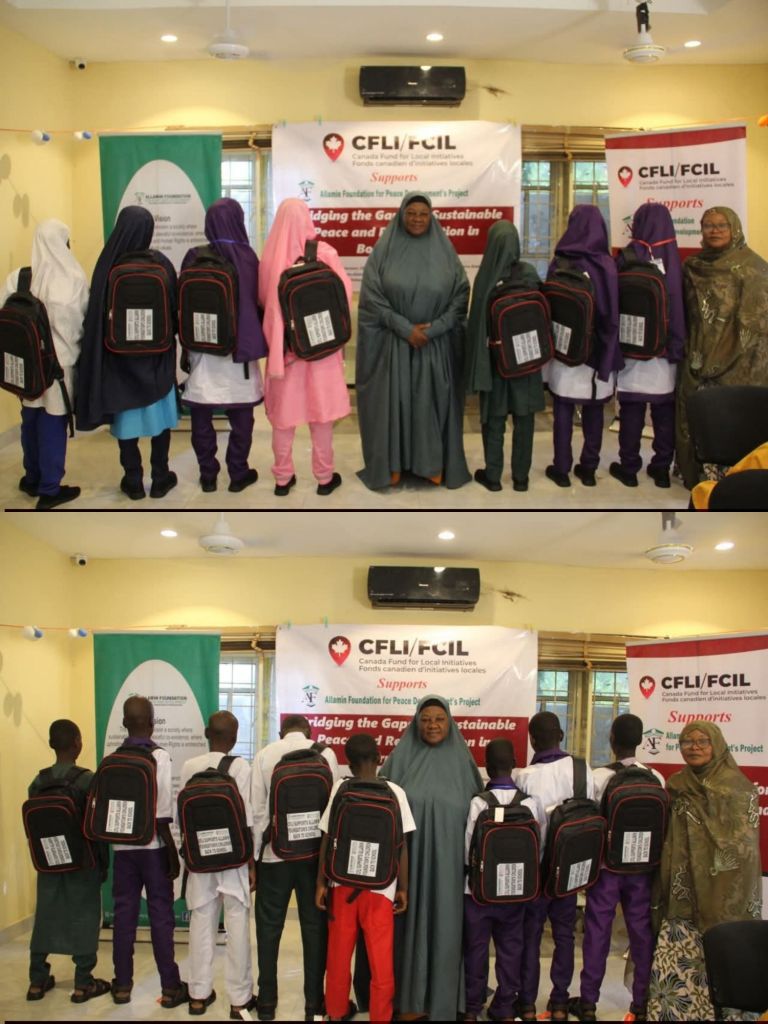
Supporting these 15 children is a commendable start, but it should serve as an example of what is possible when you truly ‘pour into’ a child. If you give them everything they need—school supplies, yes, but also community support—you transform their lives.
At CFLI, our slogan is ‘Small Numbers, Big Impact.’ We want to amplify these success stories to show the Government of Borno State that this innovation works. We’re saying: ‘If you invest the resources, this is the impact you can have.’ Let’s take what we’ve learned here and do it together for all children.”
As the meeting concluded, Allamin praised the Canadian government’s involvement but pivoted toward a broader plea for the international community to trust local entities with more substantial roles.
“I urge you to use your good office to advocate for more support to local NGOs,” Allamin said. “Use the little successes so far recorded by a small organisation like Allamin Foundation as proof of what can be achieved,” she implored the Canadian delegation.
The visit highlights a growing international interest in community-based transitional justice as Borno State continues its lengthy recovery from over a decade of conflict.
 The Humanitarian Times
Leave a comment