By Abdulkareem Haruna
MAIDUGURI, Nigeria – After more than forty years of stagnation in urban planning, Borno State is finally breaking new ground. On Monday, the Borno State Geographic Information Service (BOGIS) announced a major expansion of Maiduguri, introducing a digital land allocation system designed to end decades of bureaucratic delays and corruption.
The initiative marks a turning point for the state’s capital. As part of a 25-year development plan, the government is building a 113-kilometer ring road to encircle the city of Maiduguri and environs. The first phase of this project spans 16.5 kilometers, opening up thousands of plots for housing, business, and recreation in communities like Njimtilo, Chabal, Tungushe, Lake Chad Research Institute, Dalori, and Molai silos.
Removing the “Human Interface”
According to BOGIS, the most significant change isn’t just where the land is, but how it is being sold. In a state where land titles have historically been mired in paperwork and “middleman” fees, BOGIS has now moved the entire process online.
“The entire process starts and ends online,” said Engineer Adam Bababe, the CEO of BOGIS. “This is a far more modern approach than the old, conventional means.”
Engineer Bababe emphasized that by removing the need for physical appointments, the state aims to level the playing field for all citizens. To apply, residents only need their National Identification Number (NIN), or any other means of identification, then a minimum age of 21, and a N5,000 processing fee.
Efficiency vs. Corruption
As seen by journalists at the press briefing, the digital portal is already seeing massive traffic. In its first 48 hours, the system recorded nearly 8,000 applications. Proving the efficiency of the new tech, nearly 130 approvals were granted in under a day – a process that used to take months or even years.
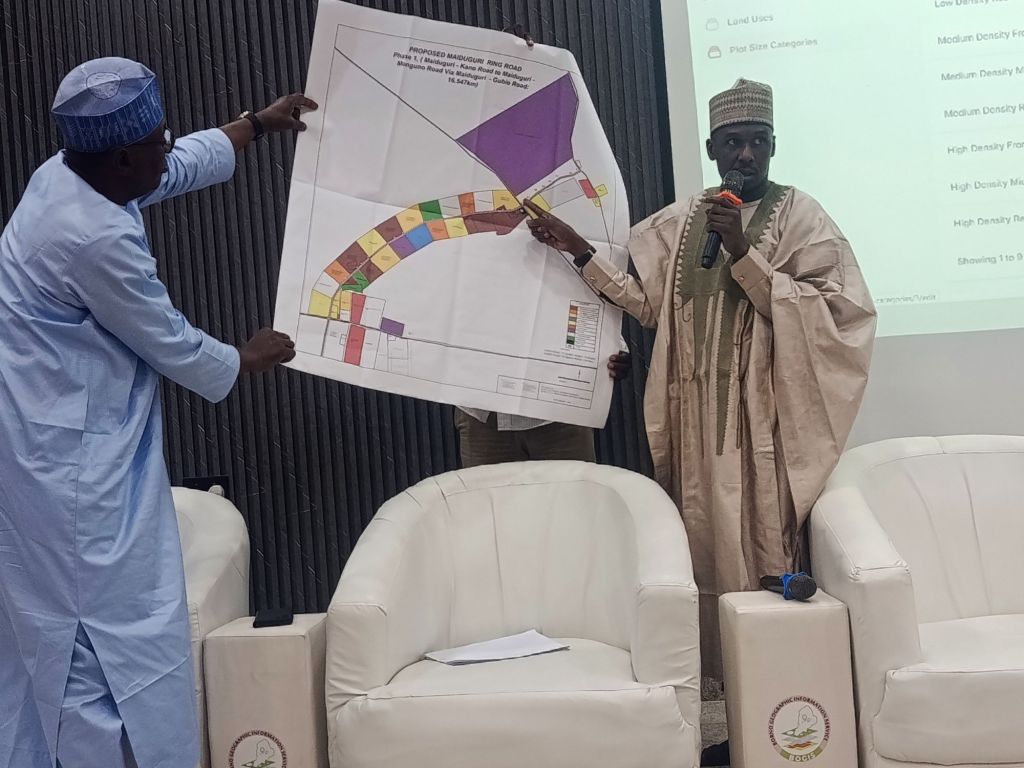
Engineer Bababe emphasized that this automation is a deliberate move toward transparency.
“The current system prevents cutting corners, time wasting, and the duplication of land titles,” he noted. “Application is online without a human interface,” effectively closing the door on the bribery and fraud that often plague land registry offices.
Erasing the concerns that many poor or not-so-educated citizens could be short changed, the Executive Secretary said the new layouts are designed to be inclusive, offering plots at various price points to ensure the city’s expansion isn’t just for the wealthy. “Prices range from N700,000 for high-density areas to 4 million Naira for low-density residential plots.
To keep the process moving, the system is strictly programmed: if an applicant fails to complete their forms within a set timeframe, the portal automatically cancels the request. This ensures that plots are not held by people who aren’t ready to pay and develop them.
To demonstrate the system’s speed, the BOGIS chief executive randomly approved an application during the press conference as journalists watched the process on a projected screen. The lucky applicant, reached by phone, confirmed live that he had already received his digital approval and was ready to pay the land premium.
 The Humanitarian Times
Leave a comment