By Abdulkareem Haruna
MAIDUGURI, Nigeria — Residents of communities around the Giwa Barracks, a famous military installation in Maiduguri, Borno State, are demanding the relocation following a recent explosion at the facility.
The blast, which occurred at midnight in May, has intensified calls for the federal government to address the security risks posed by the barracks’ proximity to civilian areas.
The explosion originated from an underground armory containing high-caliber bombs, causing widespread panic among nearby residents. Initial fears centered on a potential Boko Haram attack on the barracks. While the incident caused no direct fatalities, it reportedly led to indirect casualties and distress.
“Some aged persons were reported dead while fleeing that night, while some women lost their pregnancy while trying to run across the river to safety,” said Bakura Mohammed, a Fori resident. Fatima Adam, a Galtimari resident, recounted past fears, stating, “The ground shook, and all I could think about was getting my kids to safety.”
Communities such as Galtimari, Fori, and 122 are densely populated civilian areas situated close to the barracks, which is a frequent target for Boko Haram. The militant group has attacked Giwa Barracks multiple times since 2014, including in 2015 and 2019, often in attempts to free captured fighters.
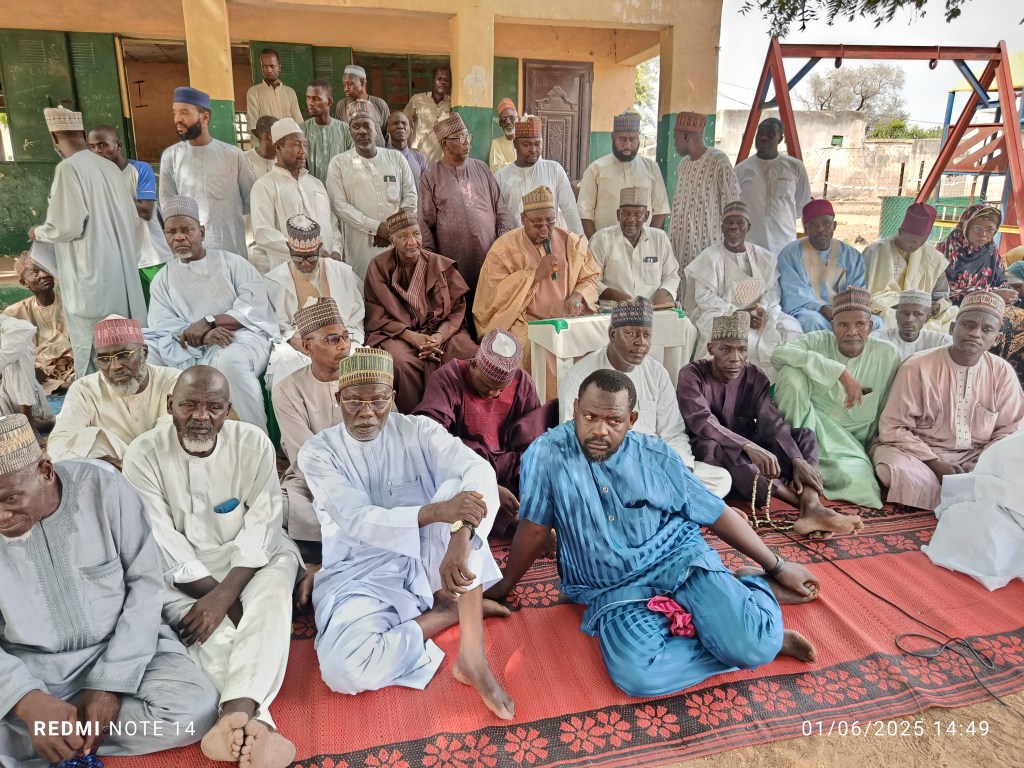
Dr. Zanna Hassan Boguma, who chairs the Bale Galtimari Consultative Forum, addressed a press conference in Maiduguri. He acknowledged military efforts but emphasized the immediate threat to residents. “Today, we’re talking about a serious problem for the people of Maiduguri, especially those near Giwa Barracks,” he stated.
Giwa Barracks historically served as the primary base for the Nigerian Army’s 21 Armoured Brigade until its relocation to Bama town after a major Boko Haram attack in March 2014. Currently, the facility functions as a major detention center for suspected Boko Haram terrorists and houses Radio Hadin Kai, the Nigerian Army’s public relations radio. It was also recently confirmed that the site continues to serve as a military ammunition storage facility.
Community leaders are urging the Nigerian government, military command, the National Security Adviser, the Borno State Governor, and the Borno State House of Assembly to expedite the barracks’ relocation. Dr. Boguma suggested moving it “to the edge of Maiduguri, or somewhere safe and far away from lots of civilians.”
The proposal for relocation is not new. Hon. Satomi Ahmad, who represents the Jere Federal area, previously sponsored a motion on the matter in the National Assembly, which passed but has not yet led to action.
“This isn’t about politics,” Dr. Boguma asserted. “It’s about saving lives, keeping civilians safe from attacks, and letting the military do their job in a more secure way.”
Barrister Abba Aji, legal adviser for the community forum, added that the demand represents “a desperate plea for a safe and normal life, free from the constant fear of explosions and potential attacks on the barracks.”
 The Humanitarian Times
Leave a comment